
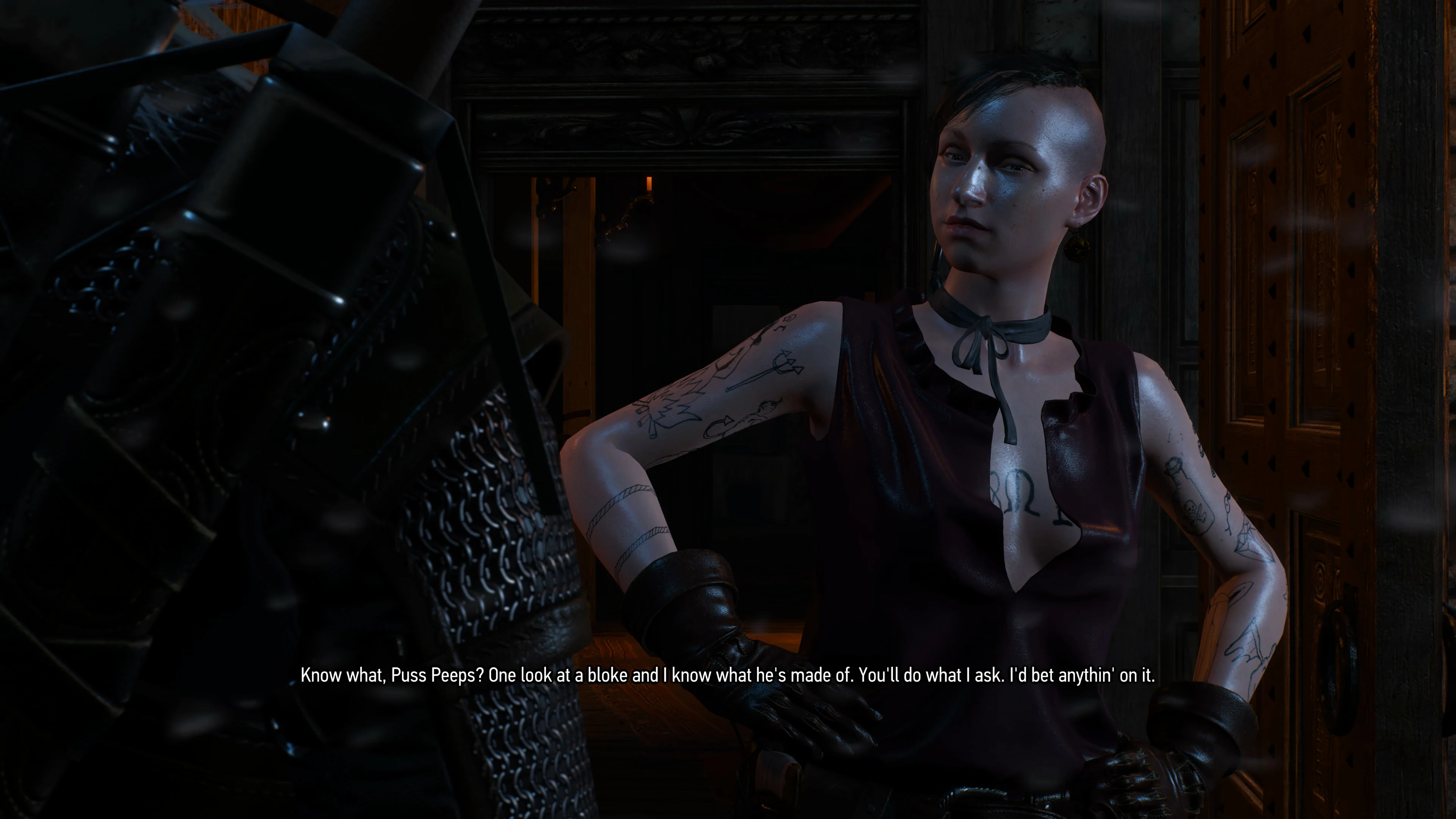
A stranger in a Novigrad doorway looks Geralt over and calls him Puss Peeps. A moment later, bloke and anythin’ arrive. The words are simple English in muddy boots, local and slightly rude. Her pose leaves little mystery. Geralt is about to be sent somewhere unpleasant.
That short exchange says more about English in The Witcher 3 than a settings screen can. Many sentences look easy on paper and change completely in someone’s mouth. The game gives each word a speaker and a consequence. Missing the joke rarely loses the quest. The important part usually returns later.
This is immersive learning in practical form. English stays around you while the story gives it meaning. A subtitle connects a voice with its spelling, and a later quest may bring the same word back. Over time, listening gets easier and useful words stay with you beyond the game. Following a story with a few gaps also makes fast English feel less frightening.
Familiar English can sound unfamiliar
The English voices move through different accents. A familiar word can lose a sound or arrive inside a nickname. Old expressions add another layer. This is why a line may feel difficult even when every word in the subtitle looks ordinary. The speaker’s voice creates most of the trouble.
The woman in the doorway is a good example. Puss Peeps is her name for Geralt, and bloke simply means man. She drops the final g from anything, so the subtitle follows her voice with anythin’. Her posture does almost as much work as the sentence.
A familiar save is a comfortable beginning. The route and the people need less attention, leaving more room for the English voices. English subtitles connect the sound of a word with its spelling.
Subtitles support the recording. They sometimes shorten a spoken line, so a small mismatch is normal. When full English becomes tiring, subtitles in a stronger language can carry the story while the English voices stay on. English subtitles become useful again once shorter lines begin to land.
A replay makes this change gentler. The next clue and difficult choice are no longer competing for attention. A ride with a companion also gives the ear more space than a fight does. A griffin is a poor language partner.
The story gives important words another chance
A fast conversation can leave one detail behind, but the game seldom leaves Geralt with no way forward. The current quest entry keeps the practical meaning on screen. Its next objective is often enough to recover the thread. The longer journal text is there when the missing detail still matters.
Investigations make this second chance especially clear. Follow appears beside a trail that is already glowing red. Examine appears when Geralt has found something worth inspecting. The action finishes the explanation without opening another window.
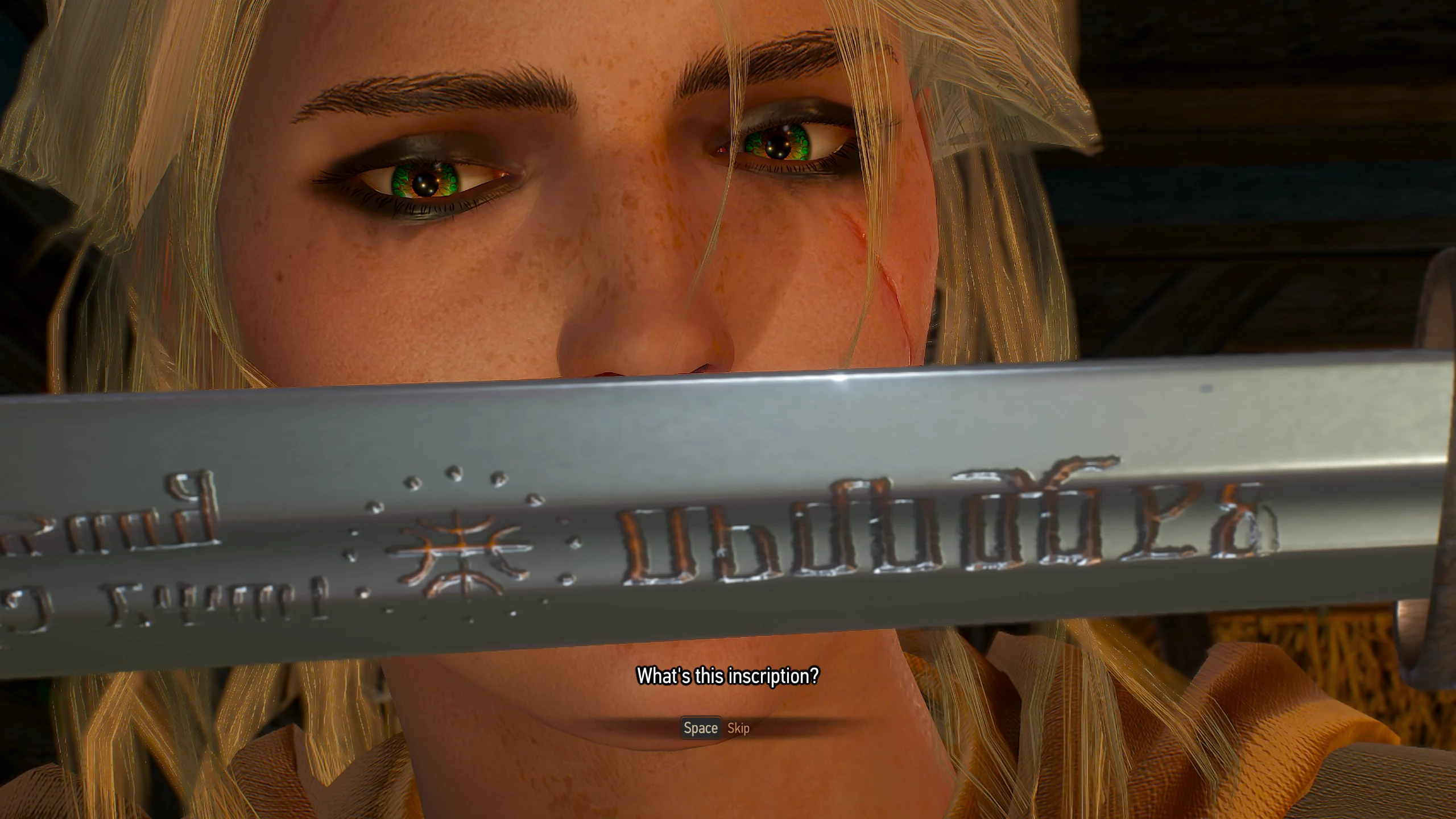
Objects can carry a new word just as well. When Ciri asks about an inscription, the writing cut into the sword is filling the whole screen. The word arrives with its meaning already attached. There is time to notice it because the scene has slowed down.
The same pattern runs through the rest of the game. A bestiary entry means more after the creature has appeared, because the question now belongs to the next fight. A letter found in a ruined room comes with clues that a random book in a chest lacks. Shop pictures can carry an item name until the word returns.
Dialogue choices offer another quiet moment. The short option shows the direction of Geralt’s answer before he speaks. A reply may then clear up the part of the conversation that went past too quickly.
Some words travel farther than Geralt
The Witcher 3 vocabulary becomes useful when it follows Geralt from one kind of trouble to another. Witness may return in another investigation, while owe belongs in ordinary conversations far beyond the Continent. Spare can change a life before the dialogue timer moves on. These words carry more value than the name of every herb or oil.
The table gathers English that fits the game and travels well into other stories. It is more useful after a word has appeared on screen. The scene supplies the first memory; the list is only a place to find the meaning again.
| Word or phrase | Plain meaning |
|---|---|
| oath | A serious promise, often made in public |
| decline | Politely refuse an offer or request |
| betray | Hurt someone by breaking their trust |
| owe | Need to pay, return, or give something |
| spare | Choose not to hurt or kill someone |
| flee | Run away from danger |
| threat | A sign or statement that harm may happen |
| bargain | Discuss a price or agreement until both sides accept it |
| witness | A person who saw an event happen |
| suspect | A person believed to be connected to a crime or wrong act |
| evidence | Facts or objects that help prove what happened |
| trail | A path or series of signs that can be followed |
| remains | What is left of a dead body or destroyed thing |
| resist | Fight against an effect or refuse to give in |
| replenish | Fill something again after it has been used |
| wield | Hold and use a weapon or tool |
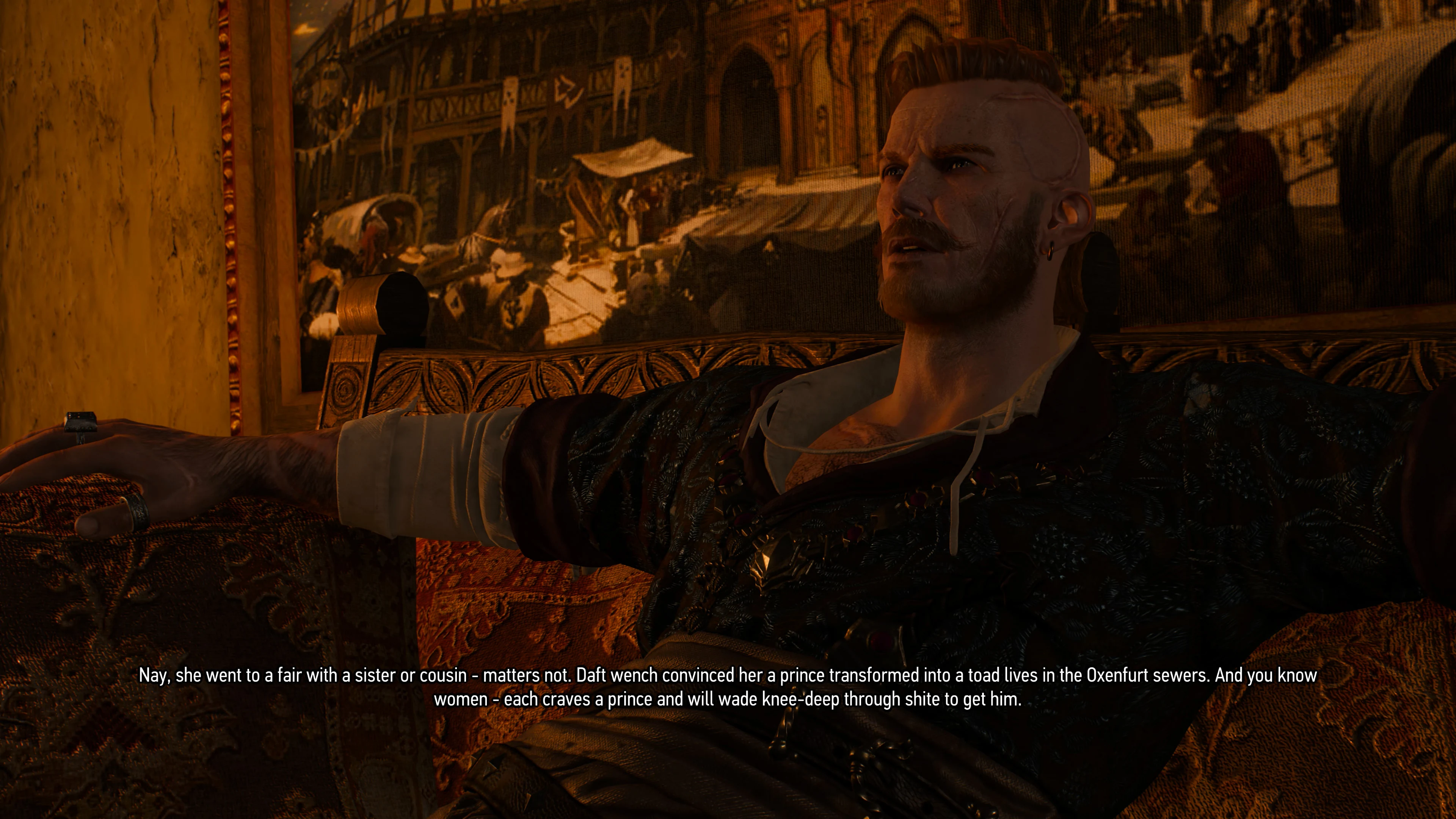
Older words have a smaller job. Nay means no, and aught can mean anything. Daft means foolish. Wench is an old and often insulting word for a woman. They help with the speaker in front of Geralt, though they rarely belong in a modern conversation.
A wraith is a ghost-like figure, so the word appears in many fantasy worlds. Necker can remain tied to the creature on screen. Proper names can also pass without a definition when the rest of the sentence still makes sense.
A complete phrase is sometimes worth more than its parts. Give his word means make a serious promise, while settle a debt means finish what is owed. Later scenes can repeat those phrases with different people. That return is where the English starts to feel familiar.
When one word holds up the story
Most unclear lines can move on with the scene. The next reply may fill the gap, and the journal is there after the conversation. A tavern insult can stay partly unclear when Geralt already knows who is angry.
The pause matters when the missing word controls a choice or quest step. Spare and accuse can send Geralt in very different directions. If one verb leaves the next objective unclear, guessing affects more than the flavor of a line.
The useful context is still on screen at that point, so the explanation works best there too. Termy places a short explanation over the game while the original subtitle remains visible. The word stays beside the speaker and the sentence around it. Once the line makes sense, the window closes and the conversation is still there.
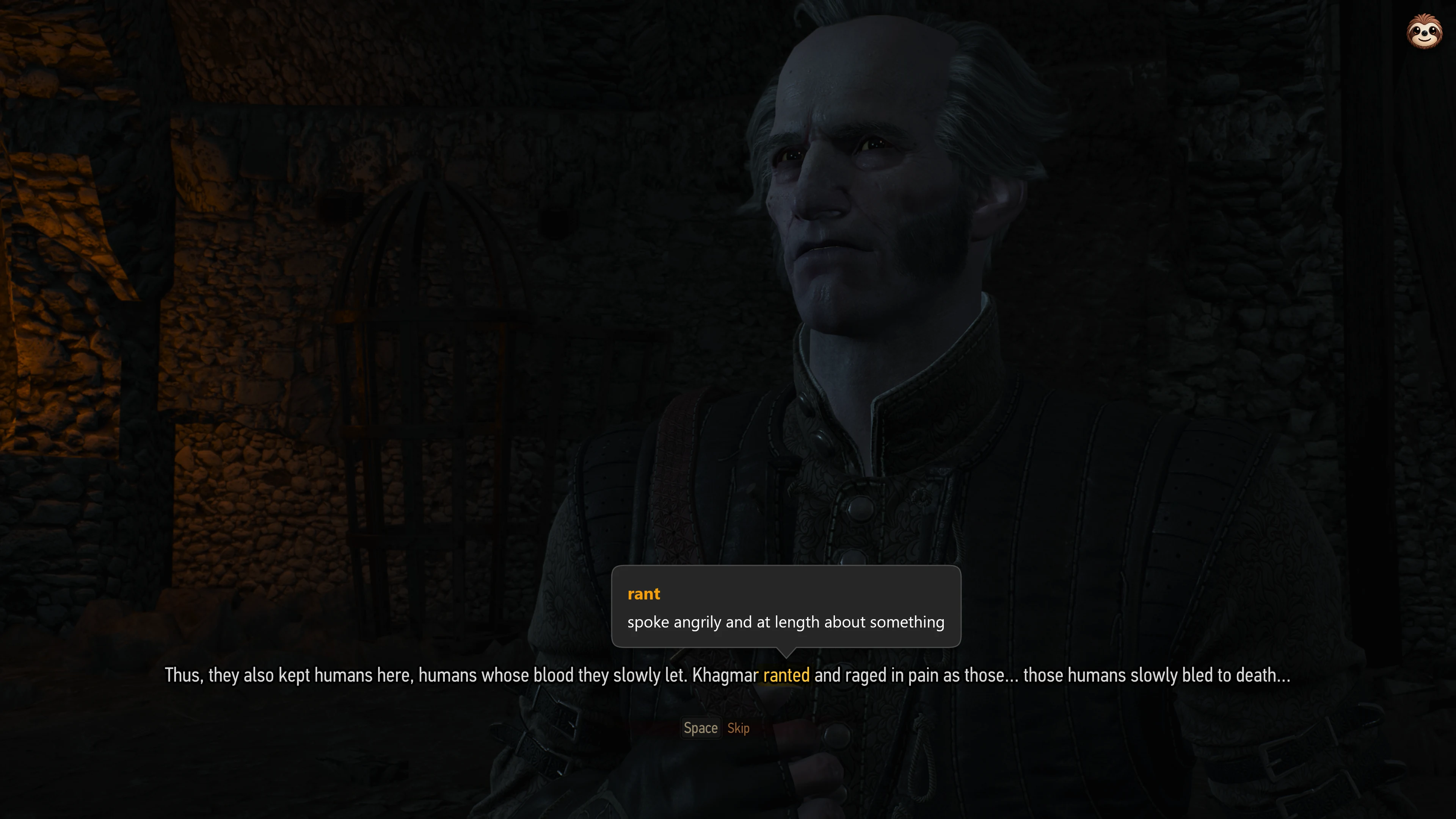
Google Translate on a phone can answer the same question. During a PC game, that means looking down at a second screen to aim the camera or type, then returning to Geralt’s line with the answer. A phone translation answers the question by switching languages.
Termy keeps the line on the monitor and, in explanation mode, uses simpler English to make the selected word clear inside it. You keep thinking in English while the original line begins to make sense. If the line is still unclear, a translation is available in the same place. A saved word returns during later review with its sentence and screenshot attached.
Termy is optional. A separate dictionary also works when all that is missing is one meaning. Most of the playthrough can keep moving without an interruption.
English settles in over a long playthrough
Progress often arrives quietly. An accent that once hid familiar words becomes easier to hear. A journal entry takes less time to read. A phrase from Novigrad turns up in another game and already feels known.
The Witcher 3 gives this process plenty of time. Debts, promises, threats, and evidence return while the story changes the people around them. One evening may bring a clear conversation; the next may be rain, steel, and subtitles that ran ahead. Geralt keeps moving, and the English comes back with him.
If this article was comfortable to read, the English version of the game is within reach. The voices will move faster than this page, but subtitles and the journal give you room to catch up. The game still has to be fun. That is what keeps you in English long enough for the words to become familiar.
Kingdom Come: Deliverance II is another good fit for older speech and long conversations. For a slower game with more travel talk, try the guide to Red Dead Redemption 2.
Termy explains difficult words over whatever is already on your screen.
Try Termy FreeBack to all articles