

Playing Elden Ring can improve your English without taking you out of the game. Dialogue, item names, and status screens give difficult words a character, a place, or an effect that helps you remember them later.
An NPC delivers one grave sentence and walks away. You may understand the command but miss the warning or insult. When the same word appears later on a talisman or spell, the second encounter is easier to follow.
Some of these words appear far beyond fantasy. News reports mention tarnished reputations and sovereign states. Novels use implore when someone is begging. This guide focuses on words that help you understand Elden Ring now or are useful again elsewhere.
Read old-fashioned dialogue without translating every line
When a character says thou, you are usually looking at a modern sentence with a few old forms mixed into it. Real Old English would look like a different language to most players today. Elden Ring mainly borrows forms associated with Early Modern English and uses them for its own tone.
These seven changes solve many lines:
- thou means you when that person performs the action.
- thee means you when that person receives the action.
- thy means your.
- ye usually means you when speaking to a group, though it can also sound polite and formal.
- hath means has.
- art means are after thou.
- A verb ending in -eth often has -s in modern English.
Read the line once without stopping. If one old form blocks the meaning, replace that form and leave the rest alone. Thou art becomes you are, and conjureth becomes conjures. The word order is usually familiar, so there is no need to translate the whole sentence.

Words that tell you who holds power
Titles in Elden Ring often tell you how a person is ranked or judged before anyone explains their history. The ordinary English meaning can reveal whether a name expresses honor, shame, or fear.
Metal is tarnished when it has lost its shine. A tarnished reputation has lost respect. As the player's title, the word suggests damaged glory before the lore explains why.
Grace can mean elegance. In religious English, it can also mean help or favor from a god. That second meaning matters at a Site of Grace, where the golden light offers guidance as well as a checkpoint.
A maiden is an old word for a young unmarried woman. Finger Maiden uses it as a title with a religious duty, while maidenless turns it into a taunt about lacking a guide.
An omen is a sign that something, often something bad, is coming. When Elden Ring writes Omen with a capital letter, it becomes a group name but keeps that threatening sense.
A word written as a name still keeps its ordinary meaning. If a title sounds familiar, try the lowercase dictionary meaning before searching the lore.
A demigod is not a full god. The word usually describes the child of a god and a human, or someone from a god's family. In Elden Ring, the title places its bearers close to divine power without making them untouchable.
A sovereign is the highest ruler of a place. The word also describes a country that rules itself, which is why sovereign state appears in news and history.
Calling the Stormhawk King sovereign establishes that it ruled the hawks rather than merely leading them in battle.
Succour means help given in serious trouble. Kenneth Haight shouting for succour from the ruins gives you enough context to understand the urgency. American English usually spells it succor.
Item names that warn you before the description does
Item names stay on screen, so there is no need to stop the moment one looks strange. Read the name and the first line of the description. That is often enough to learn what the useful word is doing before the longer lore begins.
To brandish a weapon is to raise or wave it so other people see the threat or victory. Marika's command to brandish the Elden Ring calls for a public show of power, not simply holding it.
Outside fantasy, news reports may describe someone brandishing a knife or gun.
Fetid means extremely bad-smelling. Fetid Pot has therefore told you something useful before you open the description. Outside the game, the word often describes rotting food or dirty water.
English has kept two verbs spelled cleave. One means to split something apart. Cleave to means to remain firmly loyal to a person or belief.
The word to is the clue. Sorcerers who cleave to a teaching are following it, not cutting it in half.
Gaol is the old British spelling of jail, with the same pronunciation. Evergaol therefore means an everlasting prison. You can read it as “ever-jail” even though the spelling looks stranger.
Knowing one repeated part can unlock several names. Check gaol or cipher once; you do not need to check it again every time it returns.
To ward off something is to stop it from reaching or harming you. If the Erdtree wards someone off, it is actively keeping them away. The same phrase appears in everyday advice about warding off illness or danger.
A flail is a weapon with a striking head linked to a handle by a chain. As a verb, flail means to move your arms or legs wildly without control. The weapon helps you picture the movement.
A cipher is a secret code or a way of hiding a message. Cipher Pata and the Coded Sword connect that meaning with holy writing made into weapons. Outside the game, the word appears in codebreaking and spy stories.
Old words that still carry emotion
Some old words matter because they show the speaker's attitude. Prithee softens a request, while deign marks pride. You do not need to speak this way. You only need to hear what the word is doing in the scene.
Prithee comes from I pray thee and works like please or I ask you. The Hornsent Grandam says it while offering food. The word is polite and old, which is enough to understand the tone without translating all her grammar.
A wretch is a miserable or deeply unfortunate person. It can also be an insult for someone cruel or unpleasant. The Wretch class begins at level one with a club and almost nothing else, so the first meaning fits immediately.
To forsake someone is to abandon them completely, including the loyalty or support you owed them. In dialogue about gods forsaking their followers, simple leave is too weak because forsake includes betrayal.
To implore is to beg because the matter feels urgent. Brother Corhyn does not merely ask Goldmask to continue; his choice of verb shows panic. Outside the game, the word often appears in serious requests such as “I implore you to reconsider.”
With old words, tone is often enough. If you understand that a character is begging or insulting you, keep listening. Check the exact word later if it returns.
Leal means loyal and true. It is rare today and closely associated with Scottish English. In leal hound, Marika praises Radagon's loyalty while calling him a hound, so the full phrase is more cutting than the adjective alone.
Hark means listen or pay attention. It is an order, not a casual suggestion. When a speaker begins with it, the next words are meant to be heard.
Aught means anything at all; naught means nothing. Marika's warning about failing to become aught therefore means failing to become anything. Keep both words separate from ought, which is used for duty or advice.
To deign to do something is to do it while believing it is below your position. If someone deigns to speak to you, they consider their attention a favor. The word usually carries pride or sarcasm.
Lore words borrowed from religion and history
Religion and history supply much of Elden Ring's vocabulary. The ordinary meanings help with item descriptions because words such as anathema and consecrate describe a clear relationship to religious power.
A crucible is a strong container used to melt material at very high heat. It can also mean a hard experience that tests and changes people. Elden Ring uses the first image for an early form of life in which many traits were mixed together.
An effigy is a model of a person, often made for a religious ceremony or to remember someone who died. Effigies of the Martyr are the small statues connected to summoning pools.
A revenant is a dead person who has returned, usually as something dangerous. Royal Revenants match that horror meaning directly. Their weakness to healing makes the link with death even clearer.
Blasphemy is speech or action that insults a religion or something holy. Lord of Blasphemy therefore says more than rebel: Rykard opposes the Golden Order on religious grounds.
To consecrate a place or object is to declare it holy and set it apart for religious use. Holy Ground creates an Erdtree-consecrated area. The Consecrated Snowfield uses the same idea in its name.
Anathema is something completely rejected because it goes against a belief or system. The flame of ruin is anathema to the Erdtree because it threatens both the tree and the faith built around it.
A vestige is a small part that remains after almost everything else is gone. Crucible talismans use it for horns and feathers left from an earlier form of life.
Runes were letters used in old Germanic alphabets, often carved into stone or wood. Elden Ring uses the word for written power and currency. That is why it works for both a Great Rune and the runes lost after death.
These meanings narrow the possibilities when an item description becomes dense. Anathema marks rejection, while consecrated marks religious approval or ownership.
Character stats teach everyday English too
The status menu contains some of the most reusable English in the game, and it stays open while you read. The mechanics also help define the words.
Vigor means physical strength or energy. Raising it mainly gives you more HP. Endurance is the ability to keep going through effort or pain, so its link to stamina and equip load is easy to remember.
Dexterity means controlled, skillful movement, especially with the hands. It suits weapons that depend on quick or precise handling. Poise usually means calm self-control; in Elden Ring, it is your ability to take a hit without staggering.
Arcane describes knowledge that is secret or mysterious, which suits a stat tied to certain weapons and spells. Robustness is the ability to remain strong when something harmful happens. The loading-screen tip links higher robustness to slower blood-loss buildup. Outside the game, a robust system can handle problems without failing.
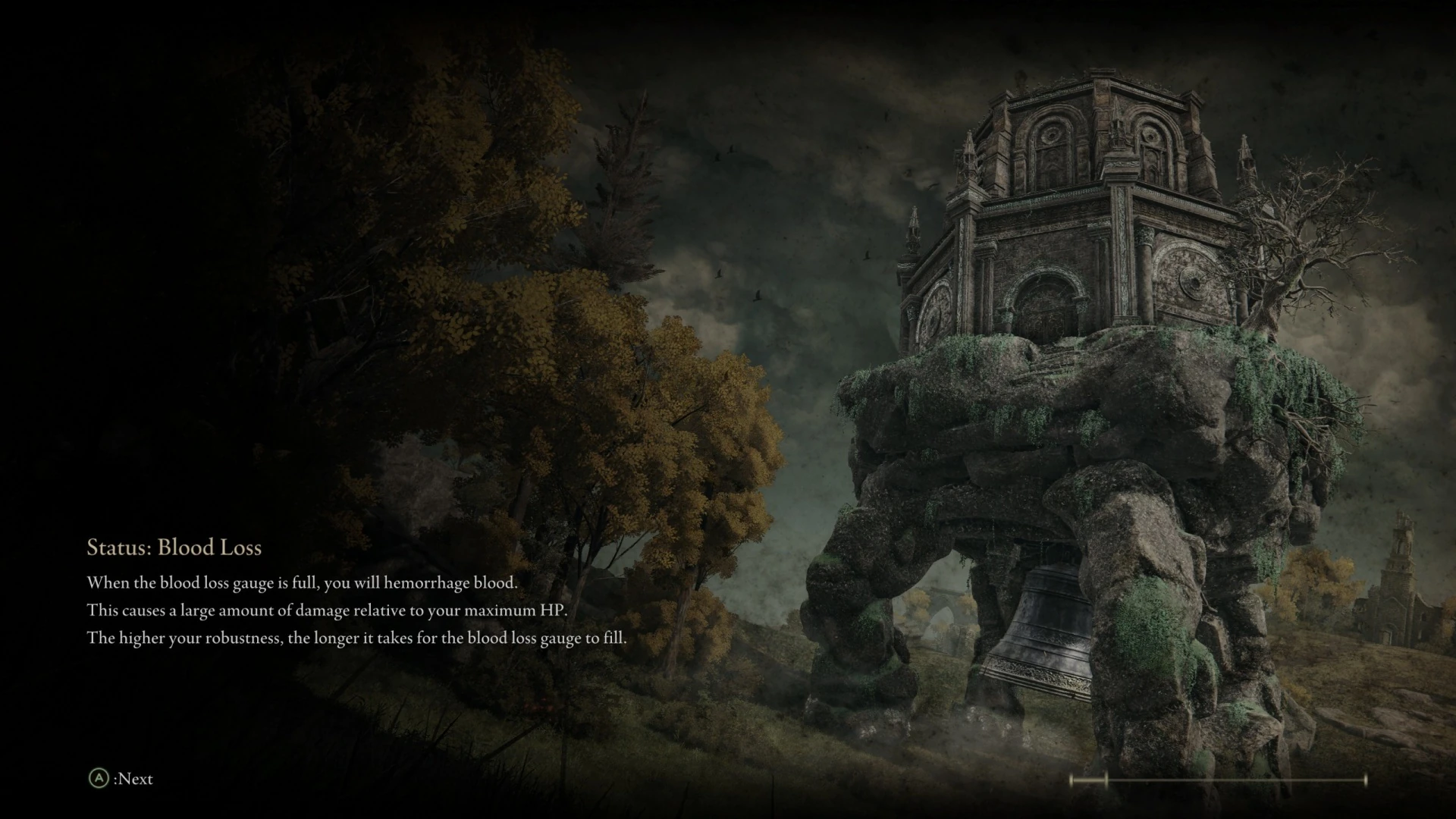
The everyday meanings make the labels easier to keep straight. A runner needs endurance, and a craftsperson may have great dexterity. The help screen still gives you the exact mechanics when you need them.
Choose the words worth pausing for
Do not stop for vocabulary in the middle of a boss fight. Most unknown words can wait. An NPC's warning deserves more attention because the line might not be repeated. Pause when one word changes a warning or choice. If you already understand the important part, keep moving.
Read an item's name and first sentence when you reach safety. Those two pieces often tell you what the item does and whether the rest is mainly lore. A strange word tied to the effect is worth checking. A word that only adds mood can wait until it appears again.
Item descriptions and status menus stay on screen, so a phone dictionary works well there. Dialogue subtitles disappear much faster. Press Alt + X while the word is visible, and Termy pauses the game so you can select it and read an explanation. Close the overlay to continue from the same moment.
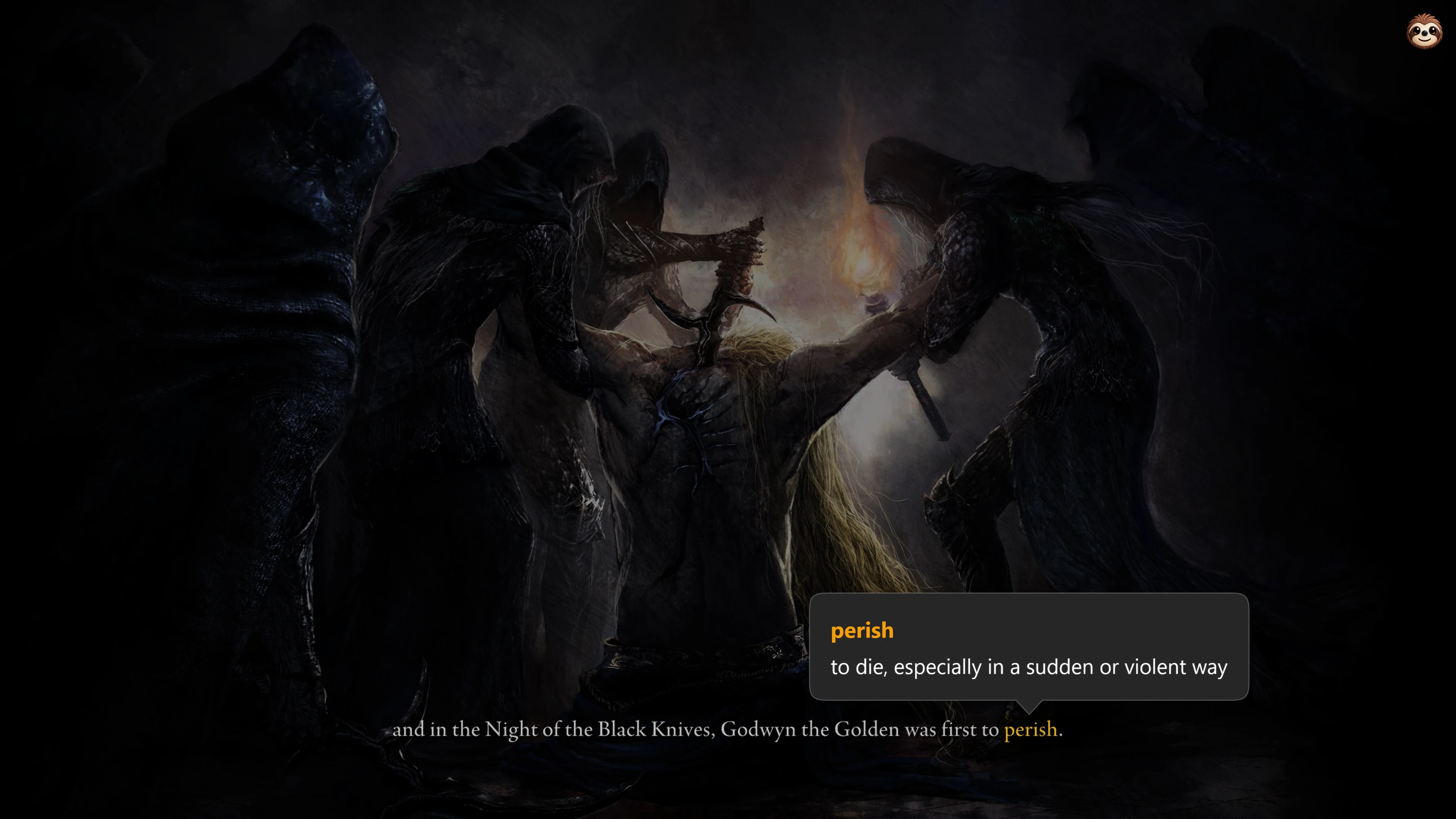
Words such as tarnished and sovereign will turn up again in news, history, and other games. When they do, you may remember the Elden Ring scene first. That can be enough to bring the meaning back.
For more ways to choose useful words without interrupting a game, read how to learn English while playing games.
Pause the game, check the word on screen, and continue from the same moment.
Try Termy FreeBack to all articles